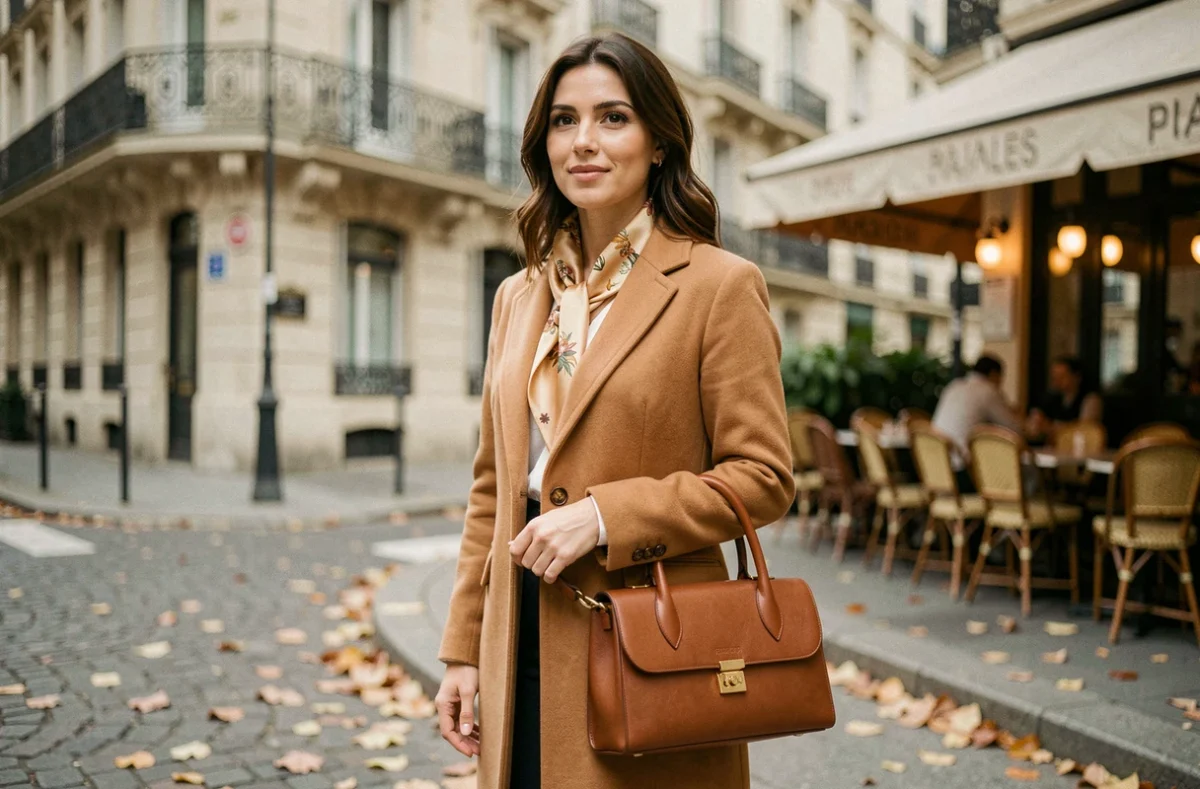
Which accessories truly change the perception of an outfit, and which ones only weigh down the silhouette? The answer depends less on the number of pieces worn than on their coherence with the base garment. Between jewelry, bags, belts, and sunglasses, the differences in versatility and visual impact are measurable, provided that the categories are compared on concrete criteria.
Versatility of Fashion Accessories: Comparative Table by Category
Not all accessories serve the same purpose. Some structure the silhouette, while others add a touch of color or a focal point. The table below classifies the major families according to three criteria: the number of compatible outfits, the ability to modify the overall perception of the look, and seasonal adaptability.
| Category | Outfit Compatibility | Visual Impact | Seasonal Adaptability |
|---|---|---|---|
| Minimalist Jewelry | Very High | Moderate | All Seasons |
| Structured Handbag | High | Strong | All Seasons |
| Belts | High | Strong (silhouette) | All Seasons |
| Scarf / Shawl | Medium | Strong (color) | Fall-Winter Mainly |
| Sunglasses | High | Strong (face) | Spring-Summer Mainly |
| Hat / Cap | Low to Medium | Very Strong | Variable by Model |
| Statement Shoes | Low | Very Strong | Variable |
The reading is straightforward: the most versatile pieces are also the least risky to accumulate. A discreet piece of jewelry or a simple belt works with almost any wardrobe. In contrast, a wide-brimmed hat or highly distinctive shoes impose a style that limits possible combinations.
To delve deeper into each family and its variations, the complete guide from Fashionova details the associations by type of outfit and body shape.

Jewelry and Belts: Accessories with High Stylistic Yield
The table highlights a point that classic lists do not emphasize: minimalist jewelry and belts share the best versatility-impact ratio. Their compatibility with almost all outfits makes them pieces for daily rotation.
Minimalist Jewelry vs. Statement Jewelry
A thin ring, a short chain, discreet geometric earrings can be worn from Monday to Sunday. Their visual impact remains moderate when taken alone, but their measured accumulation (two to three coordinated pieces in the same metal) creates a coherence that the reader perceives without always being able to explain it.
Statement jewelry (collar necklace, wide cuff) produces the opposite effect: maximum impact on a neutral outfit, but frequent incompatibility with prints or structured collars. One strong piece of jewelry is enough to polarize attention, which forces simplification of everything else.
The Belt as a Structural Tool
The belt is not a decorative accessory. On a flowing dress or an oversized blazer, it redefines the waist and alters the perceived proportions of the bust and hips. A medium-width leather belt, in a tone close to the shoes, remains the safest choice.
Conversely, a belt with a prominent buckle or patterns functions like statement jewelry: it draws the eye and limits associations. The choice between the two depends on the number of strong pieces already present in the outfit.
Bag and Sunglasses: Two Accessories that Redefine the Look
The handbag and sunglasses share a unique characteristic in the table: a strong visual impact combined with good compatibility. These are the two categories where investing in a single well-chosen piece produces the greatest effect on a daily basis.
The Structured Bag vs. the Soft Bag
A structured bag (straight lines, rigid material) immediately adds a touch of elegance, even when worn with jeans and a t-shirt. The soft bag, made of canvas or aged leather, leans towards a casual style.
The difference lies not in quality, but in the rigidity of the material. A structured bag in grained leather better resists deformation and retains its shape longer, justifying its high ranking in versatility.
Sunglasses and Face Geometry
Sunglasses alter the perception of the face more than any other fashion accessory. Their frame creates a border that can elongate, widen, or balance features. Round shapes soften an angular face, while rectangular frames structure a round face.
Choosing a frame that contrasts with the natural shape of the face remains the most reliable rule for a harmonious result. The color of the frame plays a secondary role compared to the geometry.

Fashion Accessories and Second Hand: A Parameter to Integrate
Competing results treat accessories as new purchases by default. However, the second-hand market for clothing and accessories has progressed in volume and value in France in 2025, according to data published by Refashion.
Not all channels are equal from an environmental standpoint. Refashion emphasizes that charitable shops, commercial thrift stores, and online platforms have different footprints. For accessories, second-hand offers a concrete advantage: access to branded pieces (structured bag, full-grain leather belt) at a reduced cost while avoiding the destruction of unsold items.
Since July 19, 2026, large companies can no longer destroy their unsold clothing accessories, except for exceptions regulated by delegated regulation (EU) 2026/296. This ban applies to clothing, accessories, and shoes, and requires companies to document any destroyed product. The direct consequence: more stock is redirected to second-hand or clearance channels.
Here are the criteria to check when purchasing a second-hand accessory:
- Condition of seams and closures (zippers, snap buttons, clasps), which determines the remaining lifespan of the piece
- Presence of deformations on structured bags or belts, a sign of improper storage that compromises the silhouette’s hold
- Authenticity of the piece for premium brands, verifiable via serial numbers or certificates of origin
The rise of second-hand does not change the selection criteria for a fashion accessory. It simply broadens the search area to find a versatile piece with a strong stylistic impact, in line with the priorities identified in the initial comparison.