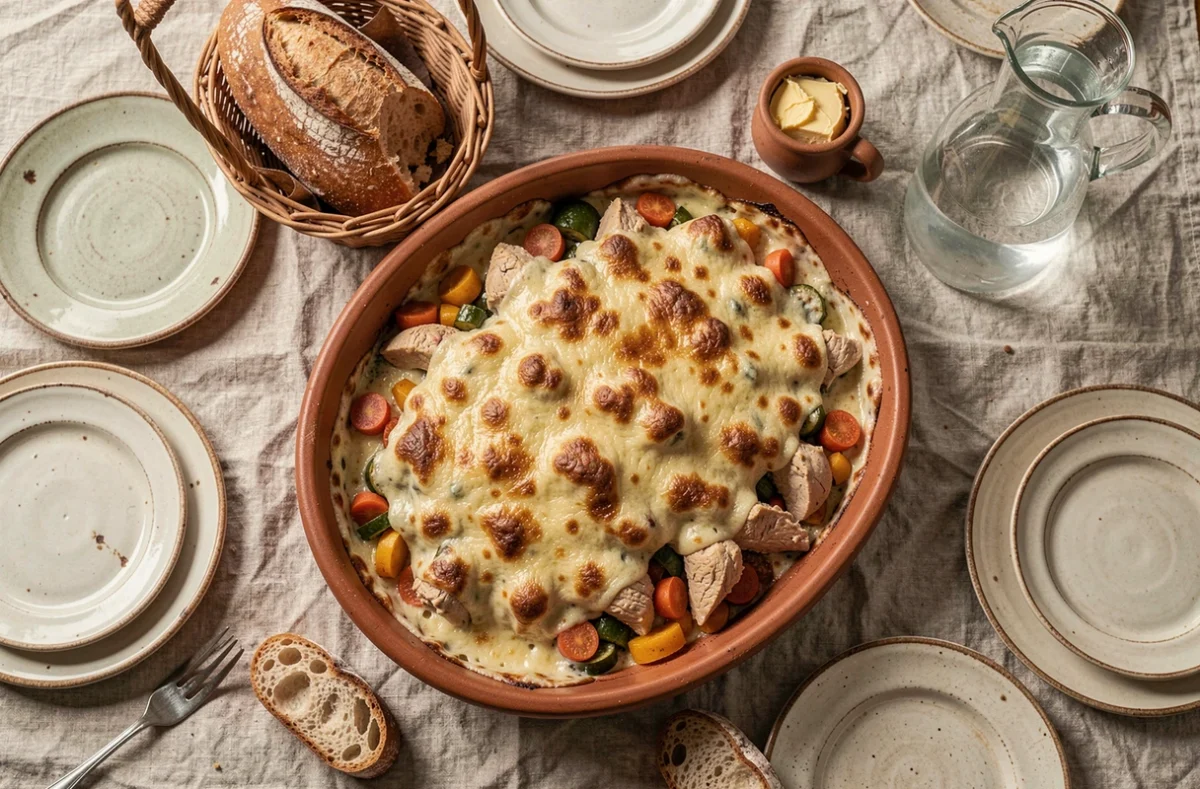
A golden gratin fresh out of the oven, the smell of broth wafting through the house, a dish prepared with vegetables from the garden or the local market. Authentic family cooking is based on simple gestures, raw ingredients, and know-how passed down through generations. This type of cooking does not seek technical performance but rather the right taste and the joy of sharing around the table.
What the term “homemade” really means in cooking
Have you ever noticed the little “homemade” logo on a restaurant menu? This pictogram corresponds to a specific legal framework. The dish must be prepared on-site from raw ingredients. Some processed ingredients are still allowed (dried pasta, yeast, common condiments), which nuances the notion of authenticity.
This label does not mean organic, local, or artisanal in the broad sense. A “homemade” dish can very well use vegetables grown on the other side of the country or imported spices. The distinction matters when talking about authentic cooking, as it requires looking beyond the label.
To discover a concrete approach to this cooking of fresh ingredients worked on-site, Chez Clara illustrates this process well, where each recipe starts from carefully selected ingredients.
Understanding this difference helps make more informed choices, whether in a restaurant or in one’s own preparation at home. Authentic does not mean perfect, but transparent about the origin and method.
Family cooking and seasonal products: the link that changes everything
Family cooking draws its strength from a simple principle: cook what is available at the right time. A leek in winter, a tomato in summer, a squash in autumn. This seasonal rhythm determines recipes, cooking methods, and even how dishes are preserved.
Why short supply chains enhance ingredient quality
By sourcing directly from local producers, the time between harvest and plate is reduced. A vegetable picked the day before retains more flavor and nutrients. This is a concrete advantage over products that have traveled for several days in cold storage.
Collective programs explore this avenue. An 11-session citizen workshop conducted for Vallée Sud Grand Paris combines downgraded products, unsold goods, and short supply chains to bring residents closer to seasonal products and reduce food waste. This type of initiative shows that family cooking can also become a lever for food education at the neighborhood level.
Adapting homemade recipes to the harvest calendar
The seasonal constraint encourages creativity. When there are no fresh tomatoes in January, one learns to work with root vegetables, gratins, and soups. French family cooking has historically relied on this adaptability.
- In winter: thick soups, stews, storage vegetables (carrots, turnips, cabbages)
- In spring: composed salads, first fresh herbs, asparagus, and peas
- In summer: raw vegetables, grilled dishes, fruits for dessert without cooking
- In autumn: mushrooms, squashes, jams to extend the fruit season
Each season dictates its own cooking and preparation techniques. This constraint, far from being a hindrance, structures a rich and varied culinary repertoire.
Reducing food waste through family cooking practices
Authentic family cooking has always integrated a form of sobriety. Before the term “anti-waste” existed, families used leftovers from pot-au-feu in salads, transformed stale bread into French toast, and saved broths for the next day’s soups.
This logic is returning today in a more structured form. In Marseille, a challenge conducted with forty families documented an effective reduction in food waste through simple practices of meal planning and reusing leftovers. Cooking as a family naturally encourages not to throw anything away.
Some concrete reflexes make a difference:
- Plan weekly meals before shopping to buy only what is necessary
- Freeze excess portions on the same day of preparation
- Use peels and tops for broths or homemade pestos
- Transform overly ripe fruits into compotes or simple pastries
These gestures require no special equipment. They are part of a domestic know-how that every household can gradually adopt.
Passing down family recipes: beyond the simple notebook
A recipe notebook annotated by a grandmother, approximate measurements (“a glass of flour,” “a knob of butter”), cooking times adjusted by instinct. Culinary transmission in families rarely goes through precise instructions. It relies on repetition, observation, and shared practice.
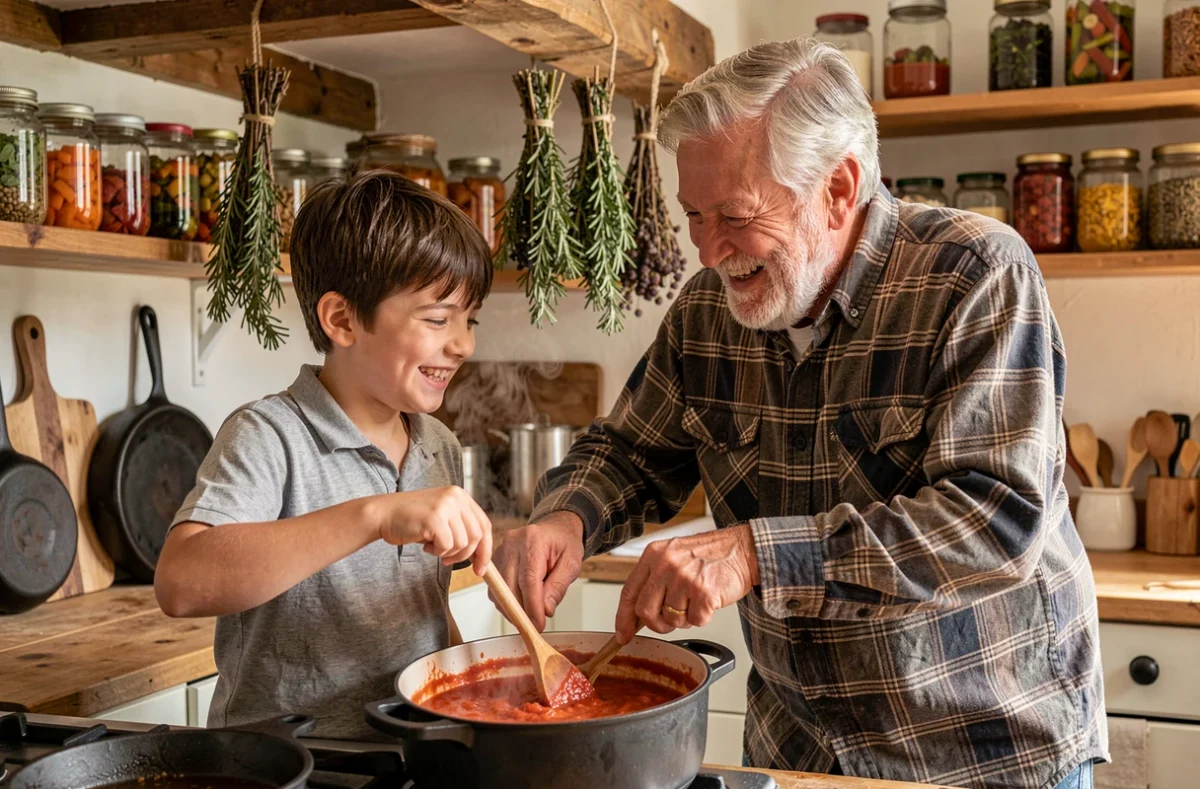
Cooking together remains the most effective way to pass on culinary know-how. Books and videos complement, but do not replace the gesture shown live. Showing a child how to feel if dough is kneaded enough or if a sauce has reduced sufficiently is a sensory learning experience.
Participatory cooking workshops, like those organized as part of community programs, replicate this dynamic on a larger scale. They allow people who have not inherited these gestures to acquire them in a friendly setting, with fresh and seasonal products.
French family cooking does not need to be frozen in an idealized past. It renews itself each time a homemade recipe is adapted to current ingredients, a particular diet, or simply to the taste of those who share it. Authenticity is less about strict adherence to a recipe than about the intention to nourish one’s loved ones well.