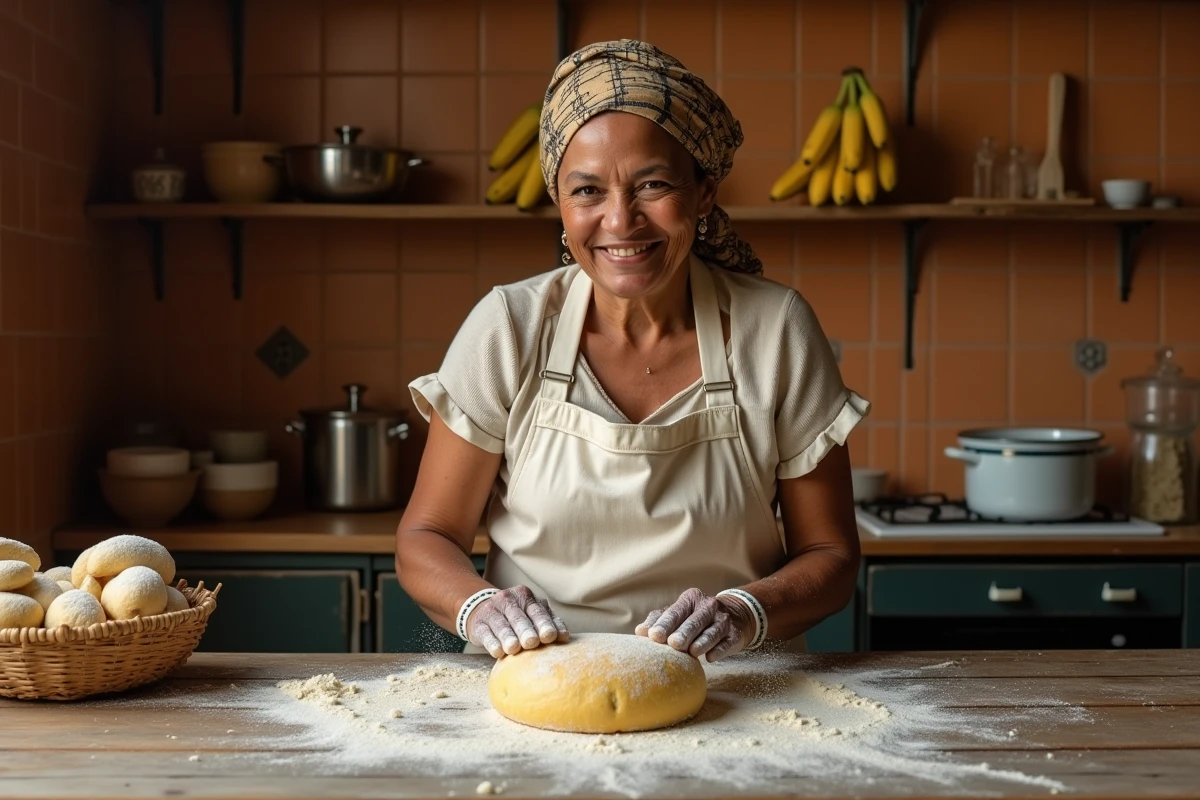
The Antillean butter bread is a leavened dough enriched with butter, eggs, and sugar, primarily consumed in Martinique and Guadeloupe during religious and family celebrations. Despite its name, it is closer to a brioche pastry than to bread in the traditional baking sense, a distinction that fuels a genuine identity debate in the French Caribbean.
Butter bread or brioche: a vocabulary dispute that reveals a colonial heritage
Technically, the composition of butter bread (flour, butter, eggs, sugar, milk, yeast) classifies it among brioche doughs. Several Antillean bakers and Caribbean anthropologists acknowledge this without hesitation. The term “bread” persists for reasons that go beyond baking.
Marie-Line Dahomay, in her chapter dedicated to Guadeloupean food practices (collective work Manger en diaspora, Presses Universitaires de Rennes, 2020), describes butter bread as a “reappropriated marker of Frenchness”. The word “bread” comes directly from the colonial French vocabulary, a time when hexagonal baking established its categories in the islands. The Antilleans have retained the term while transforming the recipe according to available products and local tastes.
This gap between the actual nature of the product and its name is not trivial. Dahomay also classifies butter bread as “festive pastries” rather than everyday bread. For everything you need to know about Antillean butter bread, this distinction between everyday use and ritual use is fundamental.
Composition of Antillean butter bread: the ingredients that make the difference
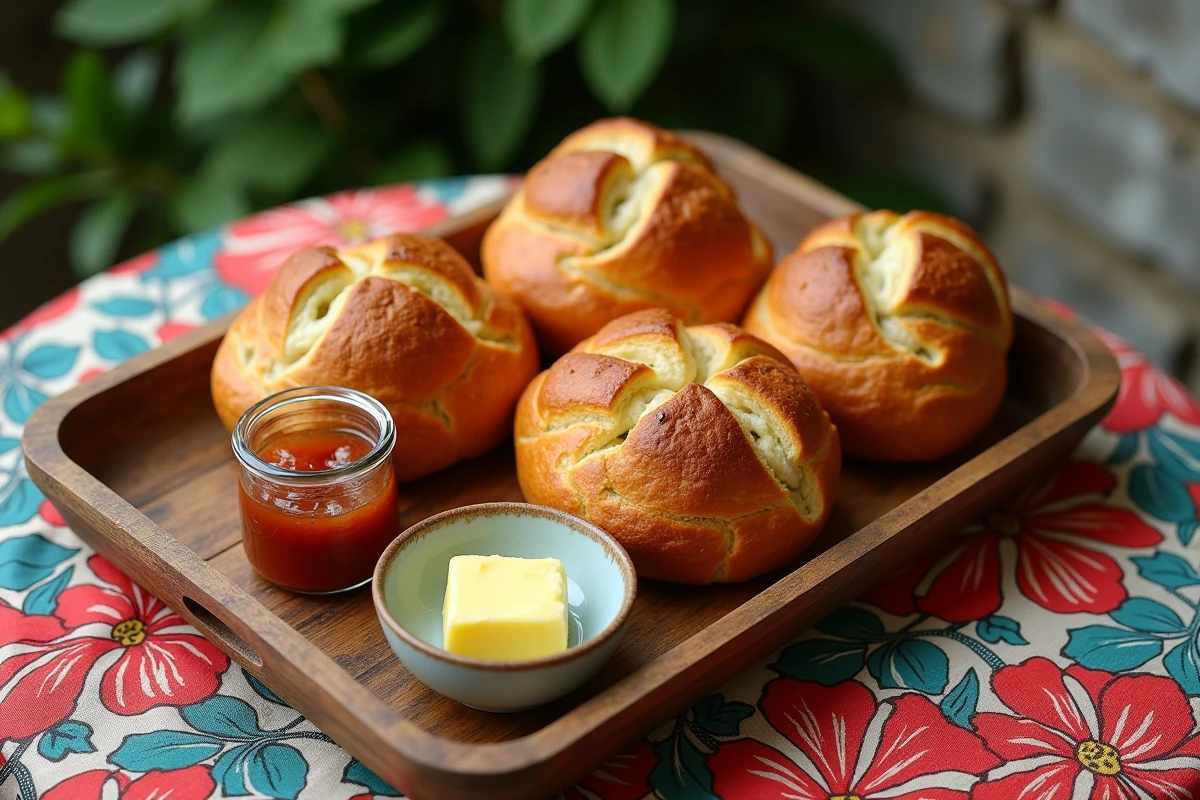
The base remains stable from one recipe to another: wheat flour, butter, sugar, eggs, milk, and baker’s yeast. This foundation is common to hexagonal brioche. The Antillean specificity lies in three elements.
- The sugar content, more generous than in a classic Parisian brioche, yet not reaching that of a cake. The result is a sweet crumb that remains compatible with savory fillings or hot chocolate.
- Flavoring with lime zest, sometimes with Bourbon vanilla or grated nutmeg, which gives butter bread its unmistakable aroma.
- Shaping into a braided crown or elongated bread, depending on families and islands, which influences the texture of the crust and the distribution of softness inside.
The proportion of butter varies according to family recipes. Some versions are very rich, close to a Nantes brioche, while others remain lighter to better accompany the communion chocolate, a thick drink made from cocoa and spices served during celebrations.
Butter bread and Antillean celebrations: a precise ritual role
Butter bread is not an everyday food. Its preparation marks an event: Christmas, Easter, communion, baptism, wake. This festive dimension explains why it has survived the changes in everyday food in the Antilles.
During “communion chocolate” (or “first communion chocolate”), butter bread is the expected accompaniment. It is dipped in spiced hot chocolate, and its dense crumb absorbs the drink without disintegrating. The combination of butter bread and hot chocolate forms the heart of the Antillean festive meal.
At Christmas, it accompanies glazed ham and pâté en pot during the Christmas Eve meal. Its collective preparation, often the night before, is part of the ritual as much as its tasting. Families pass down their own recipe, with variations sometimes marked from one municipality to another.
Antillean butter bread in the diaspora: recreating the celebration far from the islands
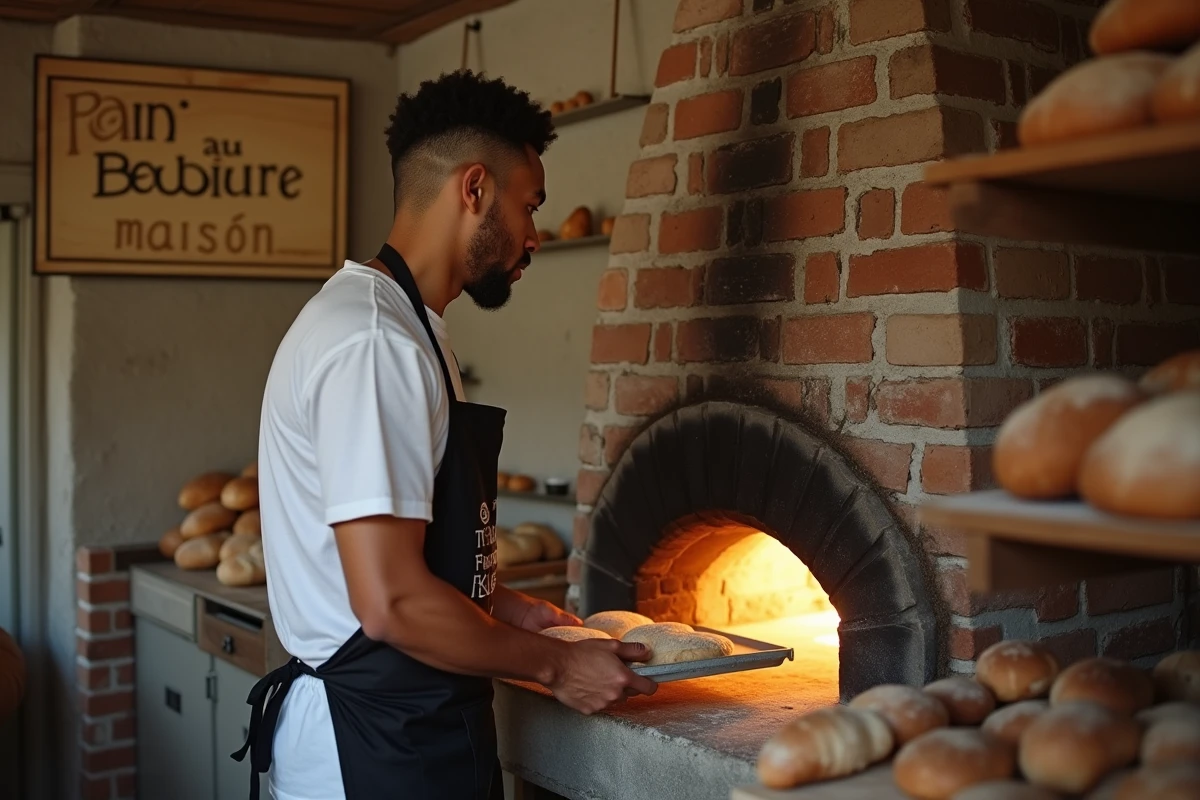
In the Antillean diaspora in mainland France, Belgium, and Quebec, butter bread plays a role as a pivot dish. Research on diasporic cuisines regularly cites it as the food around which the atmosphere of an Antillean gathering or Christmas is reconstructed, even when other more complex dishes are abandoned due to lack of time or ingredients.
This function is revealing. Preparing butter bread in suburban Paris or Montreal requires ingredients readily available everywhere (flour, butter, eggs). The difficulty lies not in sourcing but in the know-how: kneading, rising time, sugar measurement, and baking that must yield a golden crust without drying out the crumb.
Thus, butter bread functions as a transportable identity marker, more accessible than a colombo or a creole blood sausage for those living far from the Antilles. Its aroma upon coming out of the oven is enough, according to several testimonies collected in studies on the diaspora, to “recreate the homeland.”
The regional variations that divide families
Martinique and Guadeloupe each claim their version. Martinicans tend towards an elongated, sometimes braided shape. Guadeloupeans often prefer a rounder or crown shape. The spice measurements also differ: more nutmeg in Guadeloupe, more citrus zest in Martinique.
These differences fuel passionate family discussions, but no version can claim absolute authenticity. Each family holds its own “original” recipe, passed down orally, rarely written down before the era of culinary blogs.
Antillean butter bread remains one of those rare foods where the recipe matters less than the gesture and the context. Its simple composition masks a real technical requirement regarding resting times and baking, and its true secret likely lies in the fact that it was never meant to be eaten alone, but always shared.