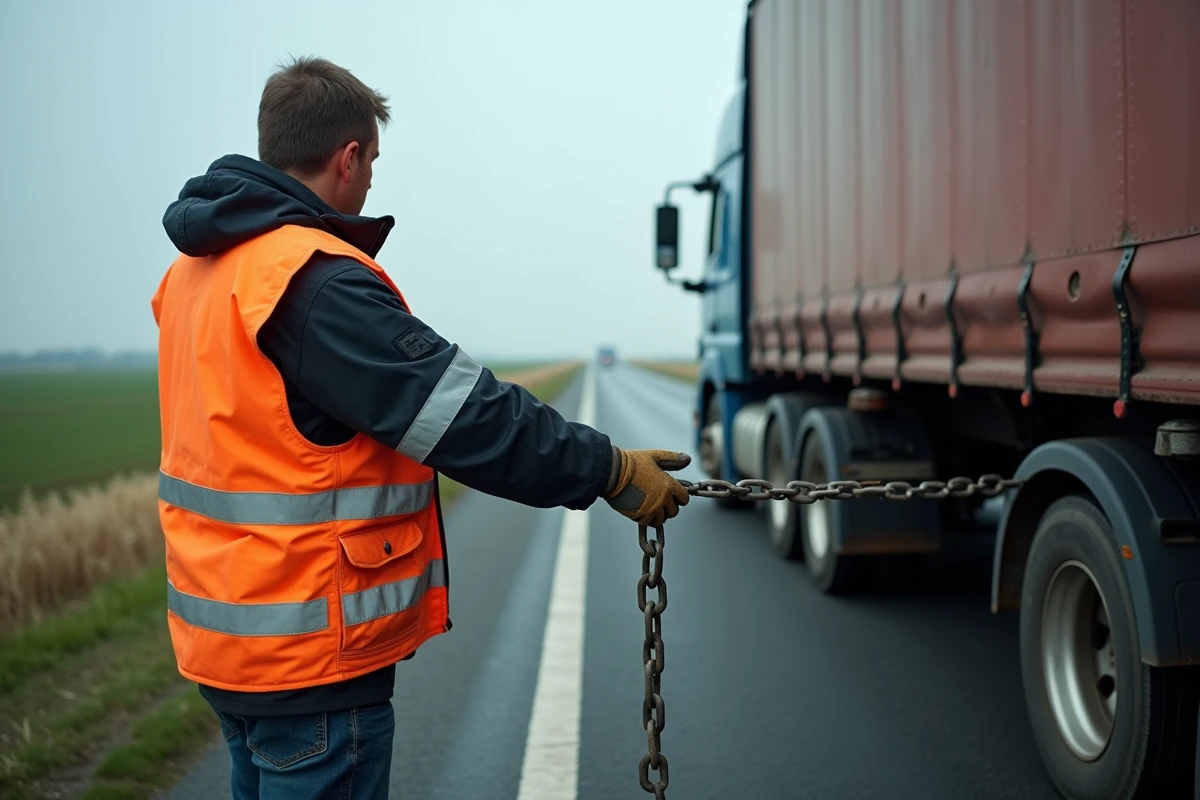
Every year, thousands of heavy trucks find themselves immobilized on the French road network. Mechanical breakdowns, flat tires, rollovers after leaving the road: getting a vehicle weighing several tons back into circulation is not something that can be improvised. Regulatory constraints, a shortage of skilled labor, and evolving safety protocols are reshaping the conditions under which these interventions take place.
Mandatory Training and Stricter Highway Protocols
Since 2024, several interdepartmental road and highway concession authorities have tightened their requirements for heavy truck recovery companies. Professionals must now provide proof of specific “roadside work” training and risk management modules in work zone areas to be authorized to intervene, especially at night or in heavy traffic.
These skills are formalized in the job reference frameworks distributed to training centers and companies in the sector. A recovery operator who does not have these certifications can no longer respond to a call on the highway or expressway.
This tightening raises a practical question: it reduces the number of eligible operators on certain sections, which can extend intervention times in less covered areas. Field feedback varies on this point, with some operators reporting improvements in safety without notable degradation in response times, while others observe real difficulties during off-peak hours.
To better understand heavy truck recovery and towing in France, one must first assess the impact of these new obligations on the entire industry.
Shortage of Heavy Truck Recovery Operators: A Concrete Barrier to Rapid Interventions
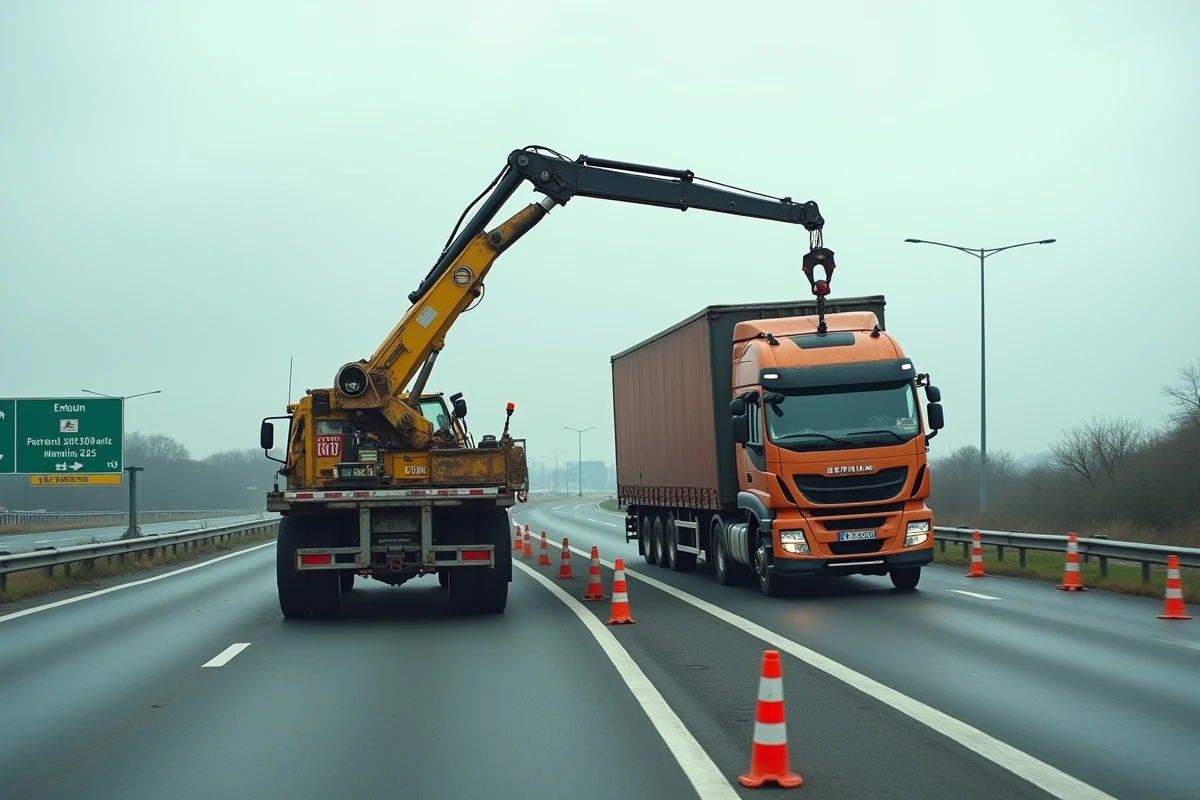
The truck recovery and towing sector suffers from a chronic shortage of candidates. Job offers for heavy truck recovery operators almost systematically include missions for lifting and towing on roads or highways, including during off-peak hours (nights, weekends, holidays).
Employers are increasing incentives to attract qualified profiles:
- Permanent contracts offered from the start with on-call and night bonuses, a strong signal in a historically precarious profession
- Company vehicles and technical equipment provided, to compensate for the constraints of constant mobility
- Funded internal training, as the pool of already certified technicians remains insufficient to meet demand
This recruitment pressure has a direct effect on territorial coverage. Some rural areas or certain time slots remain poorly served. A transporter whose vehicle breaks down at night in a sparsely populated area may wait significantly longer than in the outskirts of a large city.
Onboard Diagnostics and On-Site Repairs: The End of Systematic Towing
The updated job reference for truck professionals shows a clear evolution: recovery operators are increasingly trained in electronic diagnostics and on-site repairs. The goal is to get the heavy truck back on the road without having to mobilize a heavy tow truck for a complete towing.
This trend changes the very nature of the intervention. Where a semi-trailer was systematically towed to a workshop, a technician equipped with diagnostic tools can now identify an electronic fault, replace a sensor, or resolve a software issue directly at the roadside.
What This Means for Fleet Managers
The time-saving is the primary advantage. Avoiding a tow reduces the vehicle’s immobilization duration and limits disruptions to the supply chain. The cost is also generally lower, as mobilizing a heavy tow truck (flatbed, crane, winch) represents a significant portion of the total bill.
However, not all breakdowns lend themselves to on-site repairs. A gearbox issue, engine failure, or an accident causing chassis deformation still requires towing to a specialized workshop. On-site diagnostics primarily allow for a quick sorting between what can be resolved immediately and what requires a transfer.
Lifting After Rollover: The Most Technical Link in the Chain
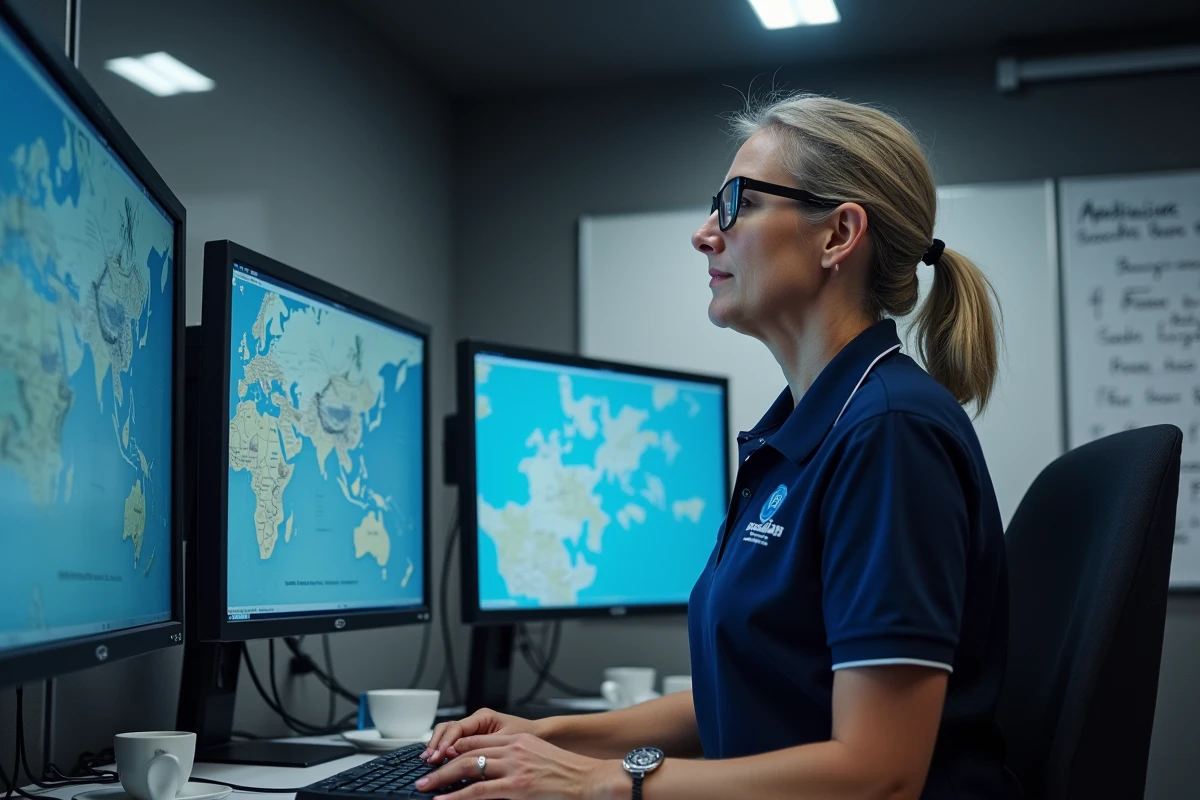
Lifting an overturned heavy truck is the most complex operation in roadside assistance. It requires specific equipment (high-capacity cranes, pneumatic cushions, winches) and coordination with law enforcement, the highway company, and sometimes environmental services in case of hazardous material leaks.
Several steps follow in a precise order:
- Securing and marking the area, with a detour set up if necessary
- Assessing the load being transported and the vehicle’s stability before any maneuver
- Pumping or transferring the cargo if the weight or nature of the load requires it
- The actual lifting, which may require several vehicles simultaneously depending on the tonnage
The duration of such an operation varies considerably. A light truck overturned on a stabilized shoulder can be lifted in a few hours. A loaded articulated vehicle lying across an expressway can block traffic for half a day or more.
The Role of Prefectural Approval
On highways and expressways, only companies with a prefectural recovery approval can intervene. This approval ensures that the company has the appropriate equipment and trained personnel. It also imposes obligations for availability and response time.
This approval system structures the market: it limits competition to operators that are truly equipped, but also creates situations of near-local monopoly on certain sections. The effect on service quality varies by department and the density of approved operators present.
Heavy truck recovery in France is at the crossroads of several tensions: increasing regulatory requirements, a lack of qualified technicians, and technological evolution transforming the profession. For transporters, checking the approval, hourly coverage, and on-site diagnostic capability of a provider allows them to concretely limit the impact of immobilization on their activity.