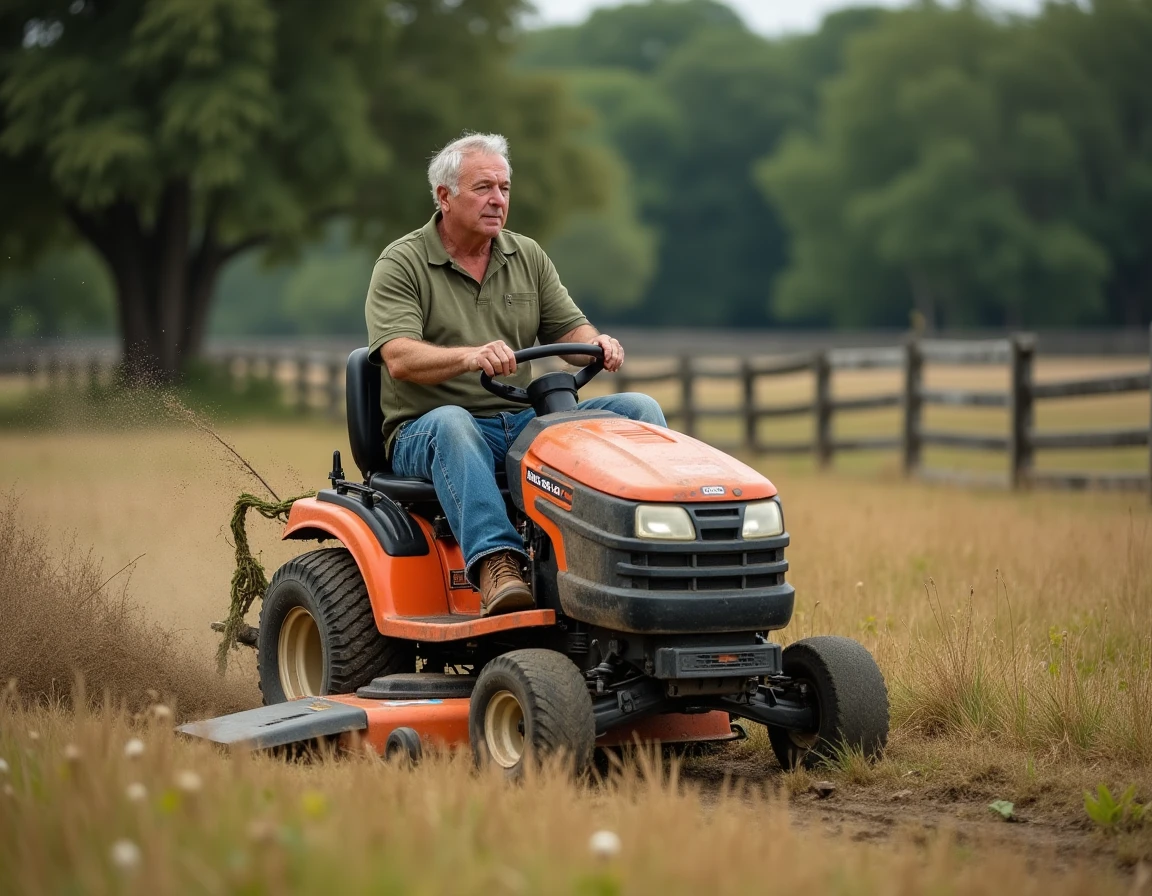
A self-propelled brush cutter cuts high and dense vegetation, sometimes semi-woody. A lawn tractor mows a well-maintained lawn at a regular height. Both machines are self-propelled, but their deck, transmission, and usage diverge from the very first blade stroke. Confusing the two is like comparing a chainsaw and a pair of pruning shears on the grounds that they both cut wood.
Cutting deck and blade type: the fundamental mechanical difference
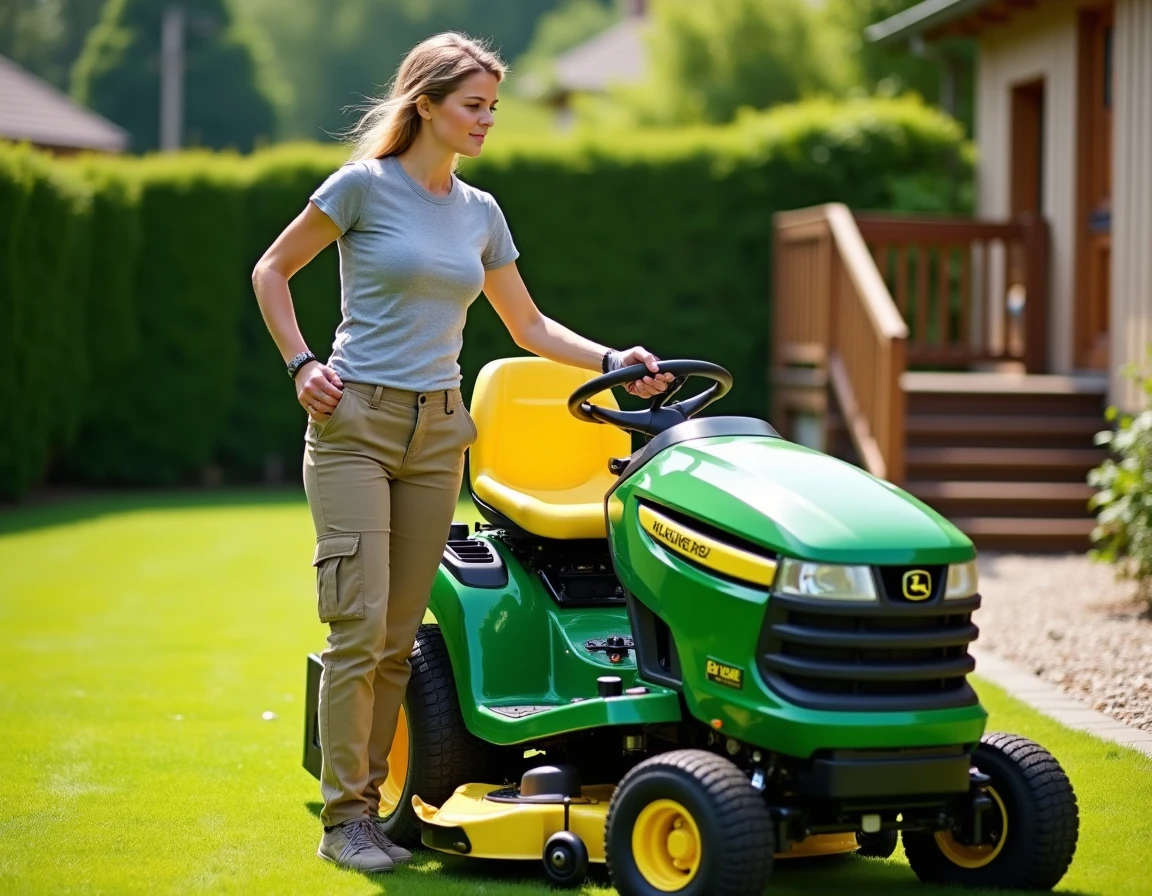
The cutting deck of a lawn tractor is designed to suck up short grass through suction, cut it cleanly, and direct it towards a collection bag or a side discharge chute. The blades spin at high speed in a closed or semi-closed deck, optimized for a close and uniform mowing result.
The self-propelled brush cutter uses reinforced blades, often knives or tines, mounted on an open or semi-open deck. This setup tolerates thick stems, brambles, and tall grasses without clogging. The trade-off is clear: the cutting finish remains rough, unsuitable for an ornamental lawn.
The choice between these two cutting architectures determines everything else. A detailed comparison between lawn tractor and brush cutter on Jardiniers info helps visualize these technical differences on concrete models.
Hydrostatic or mechanical transmission: adapting the machine to the terrain
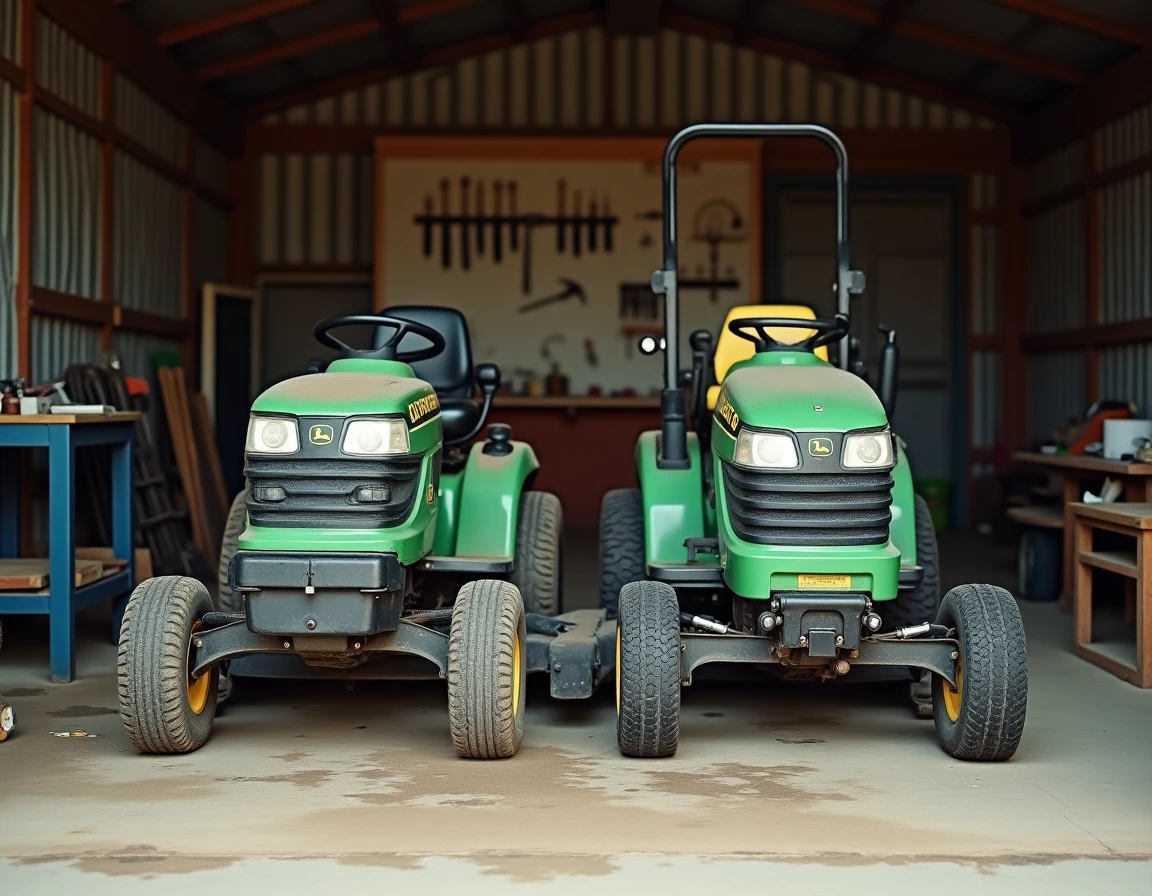
The hydrostatic transmission equips most mid-range and high-end lawn tractors. It allows speed modulation without changing gears, making maneuvers around trees, flower beds, and obstacles easier. The turning radius remains a criterion to check: the more planted the garden, the tighter the turn saves time.
On a self-propelled brush cutter, the transmission is often more robust to withstand the resistance of dense vegetation. Some models retain a mechanical gearbox, which is less comfortable but more tolerant of prolonged efforts on rough terrain.
Slopes and stability
Recent technical guides recommend not using a conventional self-propelled machine on slopes exceeding about 15 degrees. Beyond that, the risk of slipping or overturning increases significantly, regardless of the type of machine. For this type of terrain, other solutions exist: all-terrain robotic mowers, remote-controlled mowers, or backpack-mounted brush cutters.
The lawn tractor, with its higher center of gravity and lower mowing deck, is more sensitive to slopes than the self-propelled brush cutter, which is generally more compact and lower on its axles.
Area, vegetation, and mowing frequency: three concrete selection criteria
The type of terrain determines the right tool. Here are typical situations that guide the choice towards one machine or the other:
- Regular large lawn, mowed weekly or every two weeks: the lawn tractor is the suitable tool, with a collection bag or mulching function to shred the grass on-site and nourish the soil.
- Fallow land, abandoned agricultural plot, borders overrun with brambles or semi-woody vegetation: the self-propelled brush cutter takes over where the lawn tractor clogs or breaks its blades.
- Mixed terrain with maintained areas and semi-wild zones: some users combine both machines or opt for a lawn tractor with a liftable cutting deck, supplemented by occasional use of a portable brush cutter.
Frequency and cutting height
A lawn tractor operates optimally when the grass does not exceed two to three times the set cutting height. Allowing the grass to grow too high between passes causes clogs in the deck and overloads the engine.
The self-propelled brush cutter accepts much higher vegetation heights but does not produce an aesthetic result. One maintains, the other clears: these are two distinct usage logics.
Gasoline or electric engine: an increasingly significant criterion
The market for electric self-propelled machines is growing. Several recent models offer cutting widths greater than 60 cm with sufficient autonomy for a complete residential mowing cycle. Noise and the absence of exhaust fumes are cited by users as a decisive criterion in their choice.
For lawn tractors, the electric offering is expanding in residential segments. For self-propelled brush cutters, gasoline remains dominant: the power needed to cut thick vegetation imposes energy needs that current batteries struggle to meet during long sessions.
Noise pollution and neighbors
Mowing without noise-canceling headphones and without the smell of gasoline changes the experience. This criterion, long secondary, now influences the initial choice between gasoline and electric, even before the question of power arises. Local regulations on mowing hours strengthen this argument for dense residential areas.
Maintenance and engine durability according to use
A lawn tractor used on a regular lawn experiences less mechanical stress than a self-propelled brush cutter tackling brambles. The blades of the tractor are easily replaced, the collection bag is cleaned, and the transmission belt follows a predictable wear schedule.
The self-propelled brush cutter endures more shocks on its cutting components. The tines or knives dull faster, and the open deck allows debris to hit the mechanics. Maintenance is more frequent, but the machine is designed for this roughness.
The choice between the two machines does not present itself as an alternative. Each responds to a specific type of vegetation and finishing objective. Buying a lawn tractor to clear land, or a self-propelled brush cutter to maintain an ornamental lawn, is to use the wrong tool, resulting in disappointing outcomes and premature wear of the machine.