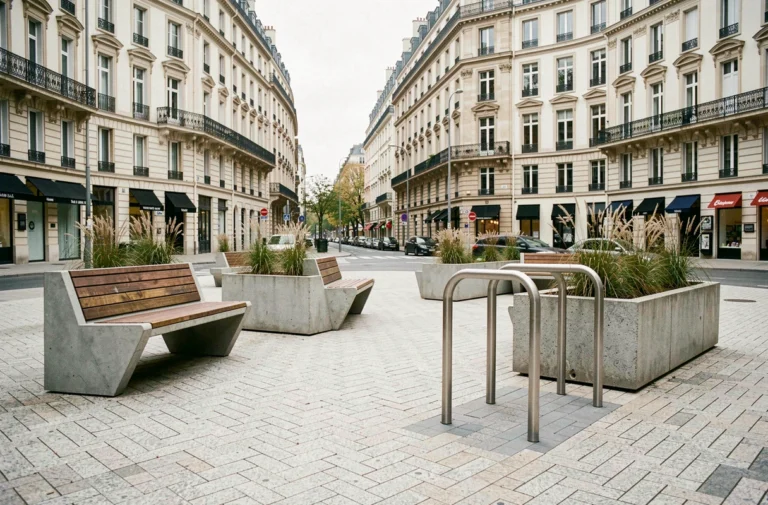
The rent cap in Paris has not slowed the rise in prices in the most sought-after neighborhoods. However, rental demand continues to explode in the suburbs, driven by the scarcity of supply and new environmental requirements imposed on property owners.
Some medium-sized cities now show rental yield rates higher than those of major metropolitan areas, defying traditional scenarios. Financing criteria are tightening, while tax policies are evolving, fundamentally changing buying and investment strategies for the coming year.
What the French real estate market reveals in 2025: dynamics, prices, and buyer profiles
The French real estate market in 2025 displays striking contrasts. On one side, inner Paris and major metropolitan areas are stagnating, affected by interest rates that continue to weigh on borrowing capacity. On the other side, medium-sized cities are seeing their attractiveness rise, driven by demographic pressure that is reshaping the map of opportunities. Major urban areas like Paris or Lyon are experiencing a period of wait-and-see, sometimes even a slight decline, while peripheral territories benefit from an unprecedented resurgence of interest.
In the suburbs, the search for a more pleasant living environment accelerates mobility. First-time buyers are now turning to urban fringes and rural areas, attracted by spacious housing and an enhanced quality of life. At the heart of every purchasing process, the question of energy renovation is paramount. It is no longer an option: the energy transition weighs on every decision.
In the face of rising costs and new standards, demand is targeting properties with guaranteed energy efficiency. Investors are readjusting their strategies, seeking a balance between yield and security, adapting to the dynamics of the real estate market and changes in public policies. For those wishing to delve deeper into these trends, https://www.immobserver.fr/ offers independent and up-to-date analyses on the evolution of the French market.
In this evolving context, vigilance becomes necessary: buyer profiles are changing, medium-sized cities are gaining attractiveness, and energy renovation is becoming a must for anyone looking to buy or invest sustainably.
Should you buy or rent this year? Winning strategies in light of the new market realities
The French real estate market is prompting everyone to reconsider their plans. The rise in interest rates has tightened the borrowing capacity of many households, making buying more demanding. Yet, homeownership remains a strong goal, especially for first-time buyers who are scouring opportunities outside urban centers. What properties are in demand? Spacious homes with solid energy performance.
At the same time, renting allows for flexibility, especially in the face of uncertainty regarding prices and evolving standards. Constraints related to technical management of buildings and energy renovation weigh in the balance. Increasingly, digital tools are becoming essential for comparing, simulating, and anticipating the impacts of a real estate choice: calculating charges, estimating renovation costs, projecting new regulations. They are true allies for making informed decisions.
Here are some guidelines for deciding between buying and renting:
- Buying: prioritize a medium-term vision, focus on properties already compliant with environmental standards, and negotiate considering any potential renovation work.
- Renting: focus on flexibility, stay attentive to regulatory changes, and take advantage of mobility to adjust your living environment more easily according to sector opportunities.
The energy transition is now a mandatory passage: every home, whether purchased or rented, will be evaluated based on its performance. Decisions are made in light of new requirements and the directions of the French real estate sector.

Investing wisely in 2025: practical tips to secure and enhance your real estate assets
Rental investment is confirmed as a tool for asset enhancement, provided that the new rules of the game imposed by the real estate sector are integrated. Above all, it is essential to assess the quality of technical management of buildings: energy performance, compliance with environmental standards, potential for energy renovation. These criteria determine profitability far more than the simple evolution of price per square meter.
To structure your decision, it is better to rely on the following elements:
- Choose properties with recognized energy efficiency: legislation is evolving, and the aversion to energy-inefficient properties is increasing.
- Use reliable digital tools to assess charges, quantify upcoming renovation work, and estimate future valuation.
- Adapt your strategy to the location: in the suburbs, spacious and quality housing meets demand; in city centers, aim for properties already compliant with energy standards.
The choice of flexible property management optimizes each investment. Mobility leases, furnished rentals, adaptation to new lifestyles: these solutions provide agility while securing income. Relying on market data allows for refining choices, particularly to maintain consistent rents in light of the regulatory context.
Energy renovation remains the central axis: each improvement adds value, ensures the sustainability of the investment, and offers a competitive advantage. Specialized digital tools facilitate this shift, making each decision more reliable and profitable.
Ultimately, the French real estate market continues to reinvent itself: those who can read between the lines, anticipate requirements, and seize new levers will be the first to build the dynamics of tomorrow.