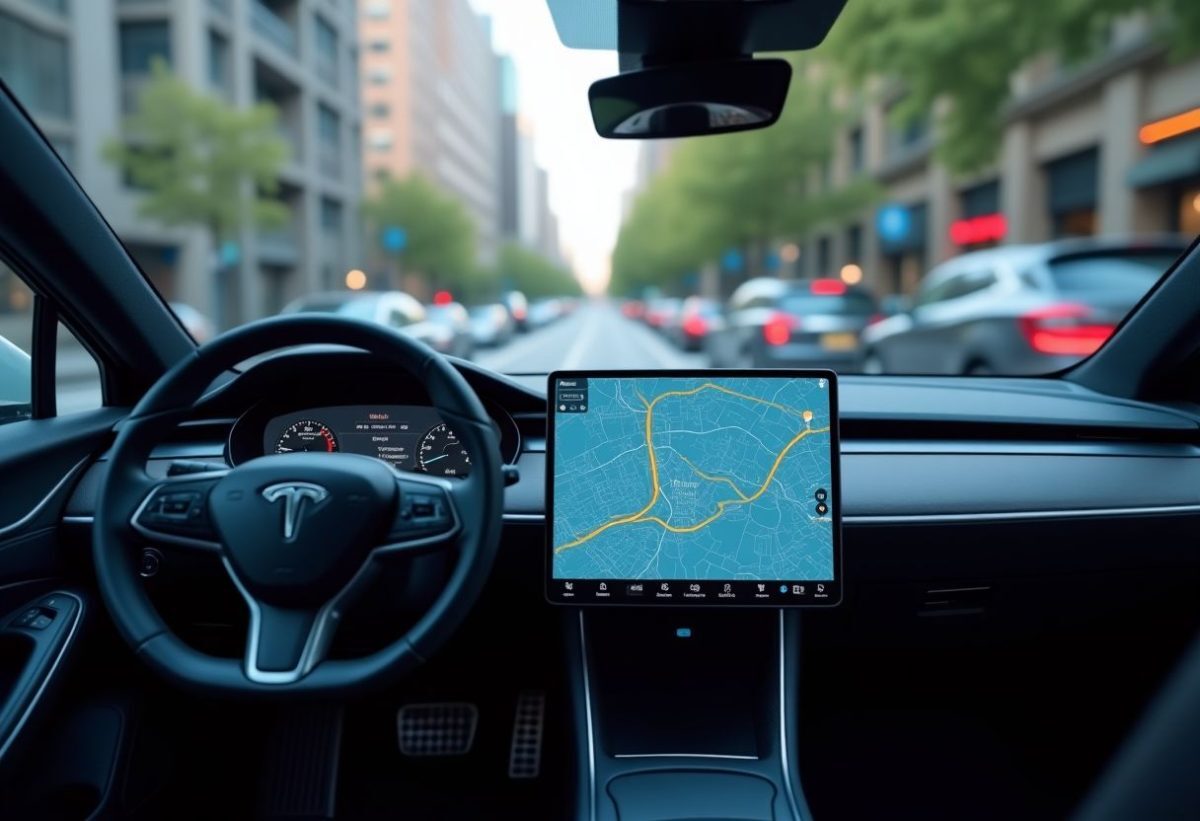
In our modern world, where technology shapes every aspect of our lives, the ability to track a vehicle’s location in real-time has transformed both our personal and professional interactions. Vehicle geolocation represents a major technological advancement, not only for businesses but also for individuals. This technology, which relies on GPS and mobile connectivity, offers a range of innovative applications from fleet management to personal security. Whether to optimize logistics operations or to reassure a family about the whereabouts of their loved ones, vehicle geolocation has found its place in our daily lives.
The technological foundations of vehicle geolocation
Understanding vehicle geolocation first requires exploring the underlying technologies that enable this innovation. These technologies do not merely determine a position; they also provide a link between location and a multitude of connected services.
GPS, or Global Positioning System, is the central pillar. Using a network of satellites orbiting the Earth, this system allows for precise determination of a vehicle’s position at any given moment. Meanwhile, mobile connectivity plays a crucial role, transmitting location data to remote servers, where it can be analyzed and used for various services.
Mapping and data analysis software complete the picture by offering intuitive user interfaces and sophisticated analytical capabilities.
Practical applications and benefits for businesses
Vehicle geolocation is not just about simple location on a map; it paves the way for more strategic and efficient resource management for businesses.
- Fleet optimization: Companies, particularly those with large fleets of vehicles, use this technology to optimize routes, reduce fuel costs, and improve operational efficiency.
- Enhanced security: By enabling real-time tracking, geolocation contributes to the safety of drivers and cargo, thereby reducing the risks of theft and allowing for quick interventions in emergencies.
- Improved customer service: With more accurate delivery times and better communication of estimated times to customers, businesses enhance their service level and increase customer satisfaction.
Impact on consumers and daily life
Vehicle geolocation is not just a tool for businesses; it has a significant impact on consumers’ daily lives, changing the way we interact with our environment.
Geolocation devices integrated into individual vehicles provide features such as detailed navigation, breakdown assistance, and peace of mind for parents monitoring their children’s journeys.
Moreover, ridesharing applications use this technology to coordinate trips between drivers and passengers, making travel more efficient and environmentally friendly.
Ethical and legal issues
While vehicle geolocation offers countless benefits, it also raises significant ethical and legal challenges that must be addressed to ensure responsible use.
- Privacy protection: The collection of real-time location data raises concerns about privacy and surveillance, necessitating strict regulations to protect individuals.
- Consent and transparency: It is imperative that users are fully informed and consenting regarding how their location data is used, stored, and shared.
- Legal framework: Legislation must evolve to regulate the use of these technologies, ensuring they are not exploited inappropriately or for malicious purposes.